
Before booking a Seoul skin clinic, describe your symptoms or cosmetic goal and ask whether a qualified clinician can assess your specific concern. Confirm who will see you, consultation language, costs, deposit terms, and follow-up. If the clinic cannot help, ask what type of clinician or facility to contact. Seek prompt medical advice for worsening symptoms rather than waiting for a cosmetic appointment.
Before booking a Seoul skin clinic, explain your main concern and ask whether a qualified clinician can assess it. Confirm who will see you, what language support is available, and what the clinic can suggest if your concern falls outside its scope. A treatment menu or an English-language website alone cannot answer those questions.
This matters whether you want help with painful breakouts, an itchy rash, or an appearance goal such as smoother-looking skin. Some people have more than one concern. You can ask for a medical assessment first and discuss cosmetic options later, without assuming that the same appointment will cover both.
Use the questions and sample messages below to prepare for a consultation. This guide is not a diagnosis or a substitute for individual medical advice. Clinic services, staff qualifications, fees, and referral arrangements should be confirmed directly before you book.
Key Takeaways
- Describe your symptoms or appearance goal before asking for a particular treatment.
- Ask who will assess you and whether the clinic can help with your specific concern.
- Confirm consultation language, fees, deposits, and follow-up before committing.
- Request a clear explanation of options, risks, alternatives, and the cost of each proposed service.
- Ask where to seek appropriate care if the concern is outside the clinic’s scope.
Medical dermatology or a cosmetic consultation: What help are you seeking?
A medical dermatology consultation focuses on assessing a skin concern, while a cosmetic consultation focuses on an appearance goal. The two can overlap, but asking for the type of help you need makes it easier for a clinic to tell you whether it is an appropriate place to start.
For example, a person with uncomfortable active breakouts may want an assessment of the current problem. A person who wants to discuss the appearance of marks left by previous breakouts may be seeking a cosmetic discussion. Someone with both concerns can say so and ask which issue should be assessed first.
Describe symptoms and their effect on daily life
Start with what you notice rather than the name of a procedure. Itching, discomfort, changes in appearance, and the effect on sleep or daily activities can all help communicate why you are seeking an appointment. You do not have to decide what the problem is before you contact a clinic.
Compare these requests:
- “I want a laser treatment for my face.”
- “I have recurring facial breakouts, and some spots are painful. Can a clinician assess them before I consider any procedure?”
The first message identifies a treatment. The second explains the concern and asks for an assessment. If you have already chosen a procedure, you can still ask whether it is suitable after the clinician has examined your skin.
Separate an active concern from an appearance goal
It can help to write down two separate priorities. One might be “I want to understand why this area is itchy.” The other might be “I would like to discuss how the area looks once the discomfort is addressed.” Both are valid reasons to seek advice, but they may require different discussions.
If you are unsure whether your concern is medical or cosmetic, say that. You might write: “I am not sure what kind of appointment I need. Can someone assess the area and explain my options?” Avoid letting a booking category replace a discussion of what is actually bothering you.
A clinic name or treatment menu does not confirm its scope
A clinic’s name, photographs, or list of procedures does not establish that it evaluates every skin condition. Likewise, a clinic that offers cosmetic services should not automatically be assumed to lack medical services. The useful step is to ask about your specific symptoms or goal.
When comparing Korean dermatology services, look for a direct answer to a direct question: “Can a clinician at your clinic assess this concern?” If the answer is unclear, ask whether the appointment is for an examination, a procedure discussion, or both. Confirm the details before paying for a treatment package.
How to describe acne, eczema symptoms, or another concern before booking
A concise description of what you are experiencing helps a clinic judge what kind of appointment to offer. Include the location, how long you have noticed it, how it has changed, and any symptoms that matter to you. A few accurate details are more useful than a diagnosis you are not confident about.
Share what you notice without self-diagnosing
Use everyday language if you do not know the medical term. You might describe an area as itchy, painful, dry, raised, or changing. If you have previously been diagnosed with a condition, distinguish that information from a new symptom: “I was previously told I had eczema, and I now have an itchy area on my hands.”
Consider including the following, where relevant:
- Location: Where is the concern, and is it limited to one area or present in several places?
- Timing: When did you first notice it? Is it constant, or does it come and go?
- Change: Has it spread, become more uncomfortable, or changed in appearance?
- Symptoms: Is it itchy, painful, or affecting sleep or daily activities?
- Your priority: Do you want an assessment, help understanding options, or a discussion of appearance?
You can use approximate dates. “About three months ago” is more helpful than guessing an exact day. If you do not remember when a change began, say so rather than filling in the gap.
Mention previous diagnoses, medicines, and reactions
Tell the clinic about relevant diagnoses, medicines, allergies, and past reactions, particularly if you hope to discuss a procedure. Bring the names or photographs of packaging when you have them. Include products applied to the affected area as well as treatments prescribed by a clinician.
A simple treatment history can include what you used, approximately when you used it, whether it helped, and whether you noticed a reaction. If you stopped a medicine or product, note when and why. Do not change prescribed treatment solely to prepare for a cosmetic appointment; ask the prescribing clinician or the clinic for advice first.
Relevant information can also include pregnancy, plans for pregnancy, or other health circumstances that you think may affect the discussion. You do not need to send a complete medical record to a booking account. Ask what information is needed in advance and how it will be handled.
Sample message: An acne concern
“Hello. I have recurring breakouts on my cheeks and jaw, and some areas are uncomfortable. I would like a clinician to assess the current breakouts before I consider cosmetic treatment. Does your clinic offer this type of consultation? Who would see me, and can we discuss previous medicines and possible follow-up?”
If the clinic replies with a list of treatments but does not answer the assessment question, repeat it. You can add: “I am not looking to select a procedure yet. I would first like to know whether a clinician can assess my active concern.”
Sample message: An eczema-like rash
“Hello. I have an itchy, dry-looking area on my hands that has been present for several weeks. I do not know what is causing it. Can a clinician at your clinic assess this concern? If not, can you suggest what type of clinician or facility I should contact?”
If you have a previous diagnosis, you might add: “I was previously diagnosed with eczema, but I am not sure whether this is the same problem.” That wording gives useful context without assuming the cause of the current symptoms.
Sample message: A cosmetic goal
“Hello. I would like to discuss the appearance of uneven texture on my cheeks. I am not sure which treatment, if any, is appropriate. Can I book a consultation to discuss options, risks, recovery, and costs without committing to a procedure on the same day?”
Adapt the message to your own concern. If you also have active symptoms, mention those separately: “I also have an area that is currently itchy, and I would like to know whether you can assess it.” This makes it less likely that the conversation will focus only on the cosmetic goal.
Questions to ask a Seoul skin clinic before paying a deposit

Before paying, confirm the scope of the appointment, who will assess you, the total consultation cost, and the terms of any deposit. A helpful reply should address your concern rather than only point you toward a package or a procedure name.
Can a clinician assess my concern, and who will see me?
Ask for the clinician’s name, professional qualifications, and role in the appointment. If you specifically want to see a dermatologist, say so and ask the clinic to confirm the clinician’s qualifications. Do not infer a person’s specialty from the clinic name or from the fact that a website uses the word “dermatology.”
You can ask:
- “Who will assess my skin during the consultation?”
- “What are that clinician’s qualifications and area of practice?”
- “Will I speak directly with the clinician before deciding on treatment?”
- “If a procedure is recommended, who would perform it?”
If booking staff cannot answer immediately, ask them to check and reply in writing. A coordinator may be helpful with scheduling and translation, but you should know whether the person answering medical questions is the clinician responsible for your care.
What can the appointment include?
Ask whether the visit includes an assessment of the concern you described and what may happen afterward. Depending on your needs, you may also want to know whether the clinician can discuss prescriptions, follow-up, or further assessment. Do not assume that any of these is included simply because an appointment is called a consultation.
For a possible medical concern, ask: “If the clinician thinks I need care that your clinic does not provide, can you suggest an appropriate next step?” A clinic may be able to suggest another facility or explain how to seek further care, but a formal referral should not be assumed.
For an appearance goal, ask: “Can the clinician explain whether a procedure is appropriate, as well as the option of not having one?” The goal is to reserve time for a decision, not merely a treatment slot.
What will I pay, and what happens if plans change?
Request the consultation fee separately from the price of any proposed procedure. Ask whether there are additional charges for interpretation, tests, medicines, supplies, or follow-up, if applicable. If the clinic cannot provide a full estimate before an assessment, ask what costs can be confirmed now and when the remainder will be explained.
Before paying a deposit, ask:
- What does the deposit cover, and is it applied to the consultation or treatment cost?
- Is it refundable if I decide not to proceed after the consultation?
- What happens if I cancel, reschedule, or the clinic cannot provide the service I need?
- When will I receive the full price and payment terms in writing?
Keep the written reply and check that it matches the booking confirmation. If the answer is uncertain, ask for clarification before sending payment. A low advertised price may not describe the entire visit, so compare the actual services and terms rather than the headline amount alone.
What to ask during the consultation
Use the consultation to understand the clinician’s assessment and make a decision that fits your priorities. You can ask for plain-language explanations, time to consider the plan, and a written breakdown before agreeing to a procedure.
Understand the assessment before discussing a treatment
Begin by explaining the concern you most want addressed. If you have several, say which one is affecting you most. Show your notes and identify anything that has changed since you booked.
Then ask the clinician what they think may be happening, how confident they are, and whether more information or assessment is needed. It is reasonable for an answer to include uncertainty. Ask what the clinician can determine during this visit and what remains unclear.
Useful questions include:
- “What did you observe, and what might explain it?”
- “Are there other possible explanations you are considering?”
- “Do I need further assessment, or is there anything I should monitor?”
- “Does my active concern change how you would approach my cosmetic goal?”
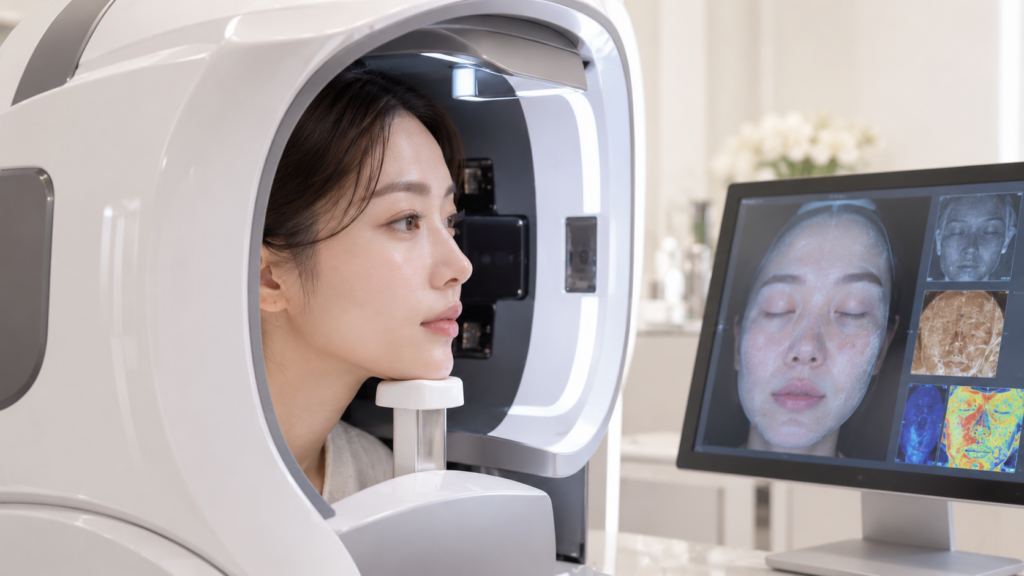
If the clinician uses a skin image or analysis, ask to see the relevant findings and hear what they mean. You can also ask what the image can and cannot tell you. An image or device output should be discussed in the context of the clinician’s overall assessment, not treated as a complete explanation on its own.
Discuss options, risks, and the choice to wait
For each proposed option, ask what it is intended to address and what a realistic result might look like for you. Ask about possible unwanted effects, recovery, limitations, and what follow-up would involve. If the clinician cannot predict an outcome precisely, ask what factors make it uncertain.
Also ask about alternatives: “Are there other approaches, including no procedure for now?” This is especially useful when you came for information rather than a specific intervention. A decision to wait can give you time to compare the plan with your schedule and discuss it with another clinician if needed.
Tell the clinician about your travel dates, budget, and tolerance for downtime. An option that sounds attractive in isolation may not fit a short visit or your ability to return for follow-up. Ask what would make the proposed timing unsuitable and whether the plan can be adjusted.
Request an itemized plan, especially for packages
If several services are proposed, ask why each one is included. A package name alone does not tell you the purpose, price, or recovery requirements of its individual components.
For each item, ask the clinic to explain:
- What concern is this intended to address?
- What benefit is realistic, and what are the limitations?
- What are the relevant risks and expected recovery considerations?
- Who will perform it, and when?
- How much does it cost separately, and is it optional?
- What follow-up or instructions would I receive?
You can say, “Please write down the individual items and prices. I would like to review them before deciding.” If you are not comfortable, ask for more time. A consultation can still be useful even when you decide not to have a procedure.
Planning language support and follow-up in Seoul
Confirm how you will communicate during the appointment and after it. An English-language website or an English reply from a booking account does not by itself establish that the clinician conducts the consultation in English. Ask who will interpret, when they will be present, and how you will receive instructions.
Confirm language support for the actual appointment
Ask whether the clinician speaks your preferred language or whether an interpreter or staff member will assist. Clarify whether support covers the whole consultation, including discussion of risks, consent, costs, and aftercare, rather than only reception and payment.
For example: “Will the clinician speak English with me directly? If not, will an interpreter be present throughout the consultation and any procedure discussion? Is there an additional fee?” If you use another language, substitute it in the question and ask the same follow-up questions.
Request written information in a language you understand when available. If you plan to bring your own interpreter or support person, ask whether they can be present and whether there are any restrictions. During the consultation, repeat your understanding of the plan and invite the clinician to correct anything you have misunderstood.
Ask how you will receive instructions and records
Before leaving, ask for a written summary of the assessment and any agreed plan. If you receive a prescription or undergo a procedure, ask for the relevant names, instructions, and contact details in a form you can keep. Confirm whether a translated version is available and which version should be used if there is a discrepancy.
Ask how to contact the clinic with a question, which hours the contact channel is monitored, and what to do if you cannot reach the clinic. If you may need to consult another clinician later, ask how to request a copy of your records and whether there is a fee or processing time.
You can also ask: “What changes should prompt me to contact you, and where should I seek help if the clinic is closed?” The answer should be tailored to your assessment or treatment rather than assumed from a general brochure.
Discuss continuity of care if your stay is short
Tell the clinic your arrival and departure dates before making a treatment decision. Ask whether the proposed assessment or plan requires more time, a return visit, or follow-up that would be difficult after you leave Seoul. If you are offered a same-day procedure, ask whether the schedule still allows enough time to understand the plan and make an unpressured decision.
For travel after an appointment, ask what the clinician recommends for your particular situation and whether there are timing considerations. If follow-up might take place after departure, clarify whether the clinic can answer questions remotely, what it can and cannot do at a distance, and how you should arrange care at home if an in-person assessment becomes necessary.
A practical handover might include the date of the visit, the clinician’s assessment, the names of any medicines or procedures, and the clinic’s contact information. Ask the clinician which details are relevant to share with a healthcare professional at your next destination.
What if the clinic cannot assess your concern?
If the clinic cannot assess your concern, ask what type of clinician or facility may be appropriate and seek an appointment elsewhere. A clinic’s inability to help with one concern does not mean you have to choose a cosmetic procedure instead.
Ask for a next step, without assuming a referral
You can write: “Thank you for letting me know. Can you suggest what type of clinician or facility I should contact for this concern?” If the clinic offers a referral, ask whether it is a formal referral, what information it includes, and whether you need to arrange the next appointment yourself.
Take your notes and any relevant records to the next consultation. If you have already been examined, ask whether a copy of the assessment can be shared. Do not assume that one clinic has sent information to another unless both the transfer and your consent have been confirmed.
If you are considering View Skin Clinic, you can contact it with the same questions: describe your concern, ask who would assess it, and confirm whether the appropriate service is available. Its specific services and referral arrangements have not been verified for this guide, so ask directly rather than relying on an assumed treatment menu.
Do not wait for a cosmetic booking if symptoms are concerning
Seek prompt medical advice if symptoms are worsening or you are concerned about how quickly they are changing. Explain the timing and changes when you contact a healthcare service, and ask how urgently you should be assessed. A future cosmetic consultation is not a substitute for timely medical advice about an active concern.
Seek emergency help for difficulty breathing or other severe, rapidly worsening symptoms. If you are unsure how urgent your situation is, contact a local medical service for guidance rather than relying on an online booking form. This guide cannot determine the urgency of an individual symptom.
A practical checklist before you book
Keep your first message short, but make sure it contains enough information for the clinic to answer the central question: can it assess your particular concern? Use this checklist to organize the conversation and save the clinic’s replies.
- Your concern: Note the location, duration, changes, symptoms, and your main goal.
- Relevant history: List previous diagnoses, medicines, products, allergies, and reactions that may matter to the assessment.
- Clinic scope: Ask whether the clinic can assess the concern and what happens if it cannot.
- Clinician: Confirm who will see you, their qualifications, and who would perform any proposed procedure.
- Communication: Confirm the consultation language, interpretation arrangements, and availability of written instructions.
- Costs: Ask about consultation fees, possible additional charges, deposits, cancellations, and refunds.
- Follow-up: Discuss your travel dates, how to ask questions after the visit, and how to obtain a record of care.
- Decision: Request an itemized plan and consider each option, including waiting or seeking another opinion.
Whether your interest is acne, an eczema-like rash, or a cosmetic concern, the first step is the same: describe what matters to you and confirm that the appointment matches your needs. Clear answers about scope, qualifications, language, costs, and follow-up can help you decide where to book and what questions to bring to the consultation.
Frequently Asked Questions
Can every Seoul skin clinic assess eczema?
Do not assume that every clinic assesses eczema or other medical skin concerns. Describe your symptoms or previous diagnosis and ask whether a qualified clinician can evaluate them. If the clinic cannot help, ask what type of clinician or facility may be appropriate.
How should I describe acne before booking?
Explain where the breakouts occur, approximately how long you have had them, whether they are uncomfortable, and what you have previously tried. Say whether you want an assessment of active breakouts, a discussion of appearance, or both. Bring relevant treatment names and notes about reactions to the consultation.
Does an English-language website mean the clinician speaks English?
Not necessarily. Ask whether the clinician will speak English directly or whether an interpreter will be present. Confirm that language support covers the assessment, treatment discussion, consent, and aftercare, and ask whether there is an additional fee.
Can I ask for a consultation without committing to a procedure?
Yes. Ask the clinic before booking whether you can pay for a consultation only and decide later about any proposed procedure. Confirm the consultation fee and whether a deposit is refundable if you choose not to proceed.
What should I ask if I am in Seoul for only a few days?
Share your arrival and departure dates and ask whether the proposed plan requires a return visit, recovery time, or follow-up after you leave. Ask how to contact the clinic, what records you can take home, and where to seek an in-person assessment if needed later.
What should I do if a clinic recommends a treatment package?
Ask for an itemized plan explaining the purpose, price, risks, recovery considerations, and optional status of each service. Discuss alternatives, including waiting or having no procedure. You can request time to review the plan before deciding.
What if the clinic cannot help with my concern?
Ask whether it can suggest an appropriate type of clinician or facility, but do not assume a formal referral is available. Bring your symptom notes and any relevant records to your next appointment. Seek prompt medical advice for worsening or concerning symptoms, and emergency help for difficulty breathing or other severe, rapidly worsening symptoms.