
Overview
How to Choose the Best Non-Surgical Face Lifting Treatment
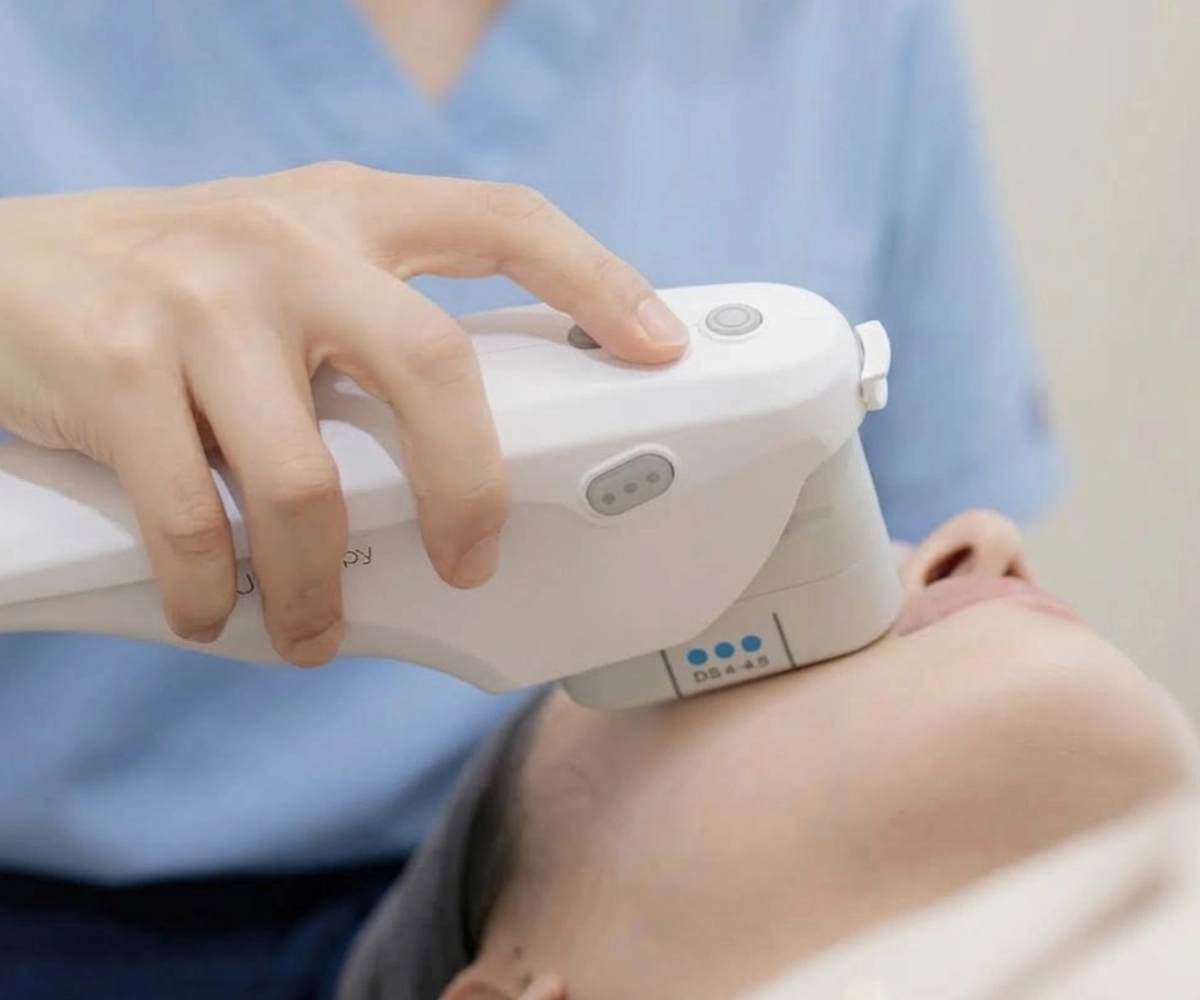
When considering a nonsurgical face lift, finding the right treatment for your skin begins with understanding the specific structural layer that requires renewal. Because every face ages differently, there is no single universal solution. The ideal procedure depends entirely on your unique skin thickness, degree of laxity, facial volume, and natural aging pace. Discover how matching the right targeted energy to your individual anatomical needs can safely and effectively restore firm and youthful facial contours.
Decision Criteria
What Should You Check Before Getting a Face Lifting Procedure?
Before selecting a lifting device, a comprehensive diagnostic evaluation of your facial profile is essential. Key clinical indicators include:
Check 01
Skin Thickness
Thicker skin with denser collagen responds better to deep ultrasound energy, while thinner, delicate skin requires controlled radiofrequency or precise multi-wavelength laser treatments to prevent unintended fat loss.
Check 02
Degree of Laxity (Sagging)
Superficial skin laxity requires surface-tightening energy, whereas deep structural sagging calls for focal heating at the deep muscular aponeurotic system (SMAS) layer.
Check 03
Facial Fat Distribution
Volume-heavy areas with stubborn double chin require targeted fat-reduction capabilities, whereas lean, hollow faces demand pure collagen tightening without lipolysis.
Check 04
Age & Biological Aging Pace
Younger skin often benefits from preventive collagen stimulation, while mature skin requires structural layer-by-layer remodeling.
Why Results Differ
Why Do Different Lifting Treatments Produce Different Results?
The difference in results lies in the energy source and depth of penetration. Non-surgical lifting devices operate via high-intensity focused ultrasound (HIFU), monopolar radiofrequency (RF), selective microwave technology, or multi-wavelength laser energy.
Penetrates down to 4.5mm (the SMAS layer), creating precise thermal coagulation points guided by real-time ultrasound imaging for deep tissue contraction.
Utilizes high-intensity focused ultrasound to coagulate deep tissue layers efficiently, offering defined jawline contours and localized fat-reduction at a high cost-performance ratio.
Uses bulk capacitive 3D heating to stimulate collagen throughout the dermis, delivering 3D surface tightening, fine wrinkle smoothing, and overall dermal thickening.
Combines 755nm, 810nm, and 1064nm diode lasers simultaneously with contact cooling, delivering immediate lifting, contour definition, and skin tone brightening without downtime.
Uses patented Coolwaves™ (microwaves at 2.45 GHz) that bypass the superficial skin to selectively melt submental fat and contract collagen fibers simultaneously.
Recommended by Indication Which Treatment Is Best for Sagging, Undefined Facial Contours?
When jawlines lose definition and jowls begin to sag, deep structural support is required.
Ultherapy Prime
The gold standard for restoring sagging lower-face contours. By reaching the SMAS layer beneath the skin, it physically contracts the supportive structural foundation that previously could only be addressed through surgical facelifts.
Titanium Lifting
An ideal alternative or synergy treatment when you seek instant contouring with zero downtime, perfect for rapid jawline tightening before key events.
Which Treatment Is Most Effective for Facial Fullness and a Double Chin?
Heavy lower-face volume requires simultaneous fat dissolution and skin tightening to prevent loose, deflated skin.
Onda Lifting
Uniquely designed with selective Coolwaves™ microwaves that target stubborn fat cells in the submental area and lower cheeks, dissolving localised fat while immediately tightening the overlying tissue.
Shurink
Uses deep-focal ultrasound cartridges to precisely target subcutaneous adipose tissue, helping debulk full cheeks and sharpen a blunt jawline.
Which Treatment Works Best for Fine Lines and Loss of Elasticity?
Crepey skin, hollowed dullness, and delicate superficial lines indicate collagen depletion in the dermis, rather than deep muscle laxity.
Thermage FLX
delivers uniform volumetric heating across the dermis. This contracts existing collagen fibrils and initiates sustained neocollagenesis over 3 to 6 months. It creates firmer, smoother, and visibly denser skin without altering natural facial fat volume—making it the ultimate solution for thin, fragile skin.
Comparison
Personalized Treatment Comparison Matrix
A side-by-side summary of all five lifting modalities at VIEW. Your physician will recommend the most appropriate option after a detailed facial assessment at consultation.
Treatment | Ultherapy Prime | Thermage FLX | Titanium | Onda Lifting | Shurink |
|---|---|---|---|---|---|
Energy Type | MFU-V Ultrasound | Monopolar RF | Triple Diode Laser | Coolwaves™ Microwave | HIFU |
Collection
Site | SMAS 4.5mm, Dermis 3.0mm / 1.5mm | Entire dermis up to 4.3mm | Multi-depth dermis to superficial fat)
| Subcutaneous fat 7mm / 3mm | Dermis to SMAS 1.5mm to 4.5mm |
Ideal Candidate | Moderate to severe lower face sagging, jowls, blurred jawline | Thin skin, fine wrinkles, crepey texture, overall laxity | Instant event-ready lifting, contour sharpening, skin brightening | Double chin, excess lower face fat, volume-heavy lower face | Early sagging, facial debulking, routine maintenance |
Discomfort | Moderate to High | Mild to Moderate | Low | Mild | Very Low |
Downtime | Minimal swelling 1 to 3 days
| Virtually none
| Zero | Zero | Quick recovery |
Results Duration | 10–14 months | 10–14 months | Immediate, 6 months+ | 6–12 months | 6–12 months |
By Age Group
Which Lifting Procedure Should You Consider by Age Group?
Ageing is a progressive process. The right lifting strategy evolves with your skin — from early prevention in your 20s through to multi-depth remodelling in your 50s and beyond.
20s and Early 30s
Early Prevention and Contour Sculpting
Shurink · Onda · Titanium
Early collagen banking and defined facial contours. Onda quickly corrects persistent submental double chins, while Titanium or Shurink helps define the jawline without invasive downtime.
Mid-30s and 40s
Targeted Volume and Structural Retention
Ultherapy · Thermage FLX · Combination
True biological ageing begins as collagen slows and gravity pulls the SMAS layer downward. Alternating or combining Ultherapy (deep lifting) and Thermage (surface firming) provides the most comprehensive defence.
50s and Beyond
Deep Layered Multi-Level Rejuvenation
Ultherapy + Thermage + Maintenance
Advanced laxity and deeper folds require multi-depth intervention. High-vector Ultherapy contracts deep structural bands; Thermage rebuilds depleted dermal collagen. Titanium or Onda maintains sharpness between sessions.
FAQ
Frequently asked questions
Is it safe to combine Ultherapy and Thermage in the same session?
Yes, combining both treatments—often referred to as “Therma-Ulthera”—is clinically safe and highly synergistic when performed by experienced practitioners. Ultherapy targets the deep SMAS layer (4.5mm) to pull up sagging facial structures, while Thermage works on the upper and mid-dermis to tighten surface skin. By targeting completely different anatomical depths, they deliver comprehensive 3D lifting without overlapping energy interference.
Can lifting procedures cause facial fat loss or cheek hollows?
Unintended fat loss typically occurs when high-intensity ultrasound energy (such as Ultherapy or Shurink) is incorrectly focused on fat compartments in naturally lean faces. To prevent this, personalized energy mapping is critical. Patients with thin faces and low cheek fat should prioritize dermal radiofrequency like Thermage FLX or superficial laser lifting like Titanium, which preserve volume while tightening skin.
How long do the results of Ultherapy, Thermage, and Onda last?
Deep collagen regeneration from Ultherapy and Thermage FLX typically peaks at 2 to 3 months and lasts approximately 10 to 14 months. Treatments like Onda and Titanium provide immediate visible contouring; when completed in a recommended 3-session protocol, Onda results can be maintained for up to 6 to 12 months with proper lifestyle care.
What is the difference between Ultherapy and Shurink?
While both devices utilize High-Intensity Focused Ultrasound (HIFU) to coagulate the SMAS layer, Ultherapy incorporates patented DeepSEE™ real-time visualization technology. This enables physicians to directly see the skin layers on a monitor and deliver energy to precise depths safely. Shurink relies on tactile estimation without real-time ultrasound imaging, offering a faster and more economical alternative.
How soon can I resume daily activities after Titanium or Onda lifting?
Both Titanium and Onda are virtually zero-downtime procedures. Because they integrate advanced surface contact cooling, they do not cause scabbing, bleeding, or noticeable bruising. Patients can apply skincare, wear makeup, and resume daily social activities immediately after their session, making them ideal for individuals who cannot afford recovery downtime.