
Aging is a natural process, but how your skin changes over time can be influenced by genetics, lifestyle, sun exposure, and daily skincare habits. Today, more people are becoming interested in slow aging—an approach that focuses on maintaining healthy-looking skin, supporting skin quality, and addressing early signs of aging before they become more noticeable. Rather than waiting for deep wrinkles or significant skin laxity, preventive skincare and selected aesthetic treatments may help maintain a refreshed, natural appearance over time. In Korea, where advanced dermatology and aesthetic treatments are widely available, slow aging has become an interesting approach for people who want to care for their skin proactively. But what does slow aging really mean, and when should you consider professional skin treatments?
What Is Slow Aging in Skincare?
Slow aging is an approach to skincare that focuses on maintaining skin health and addressing visible changes gradually over time. Unlike traditional anti-aging approaches that often focus on correcting existing wrinkles or sagging, slow aging emphasizes consistent care, early assessment, and personalized treatment choices. It does not mean stopping the natural aging process. Instead, the goal is to support healthy-looking skin and manage concerns as they develop.
A slow aging routine may include:
- Daily sun protection to reduce UV-related skin damage.
- Consistent skincare to support hydration and the skin barrier.
- Healthy lifestyle habits that support overall skin health.
- Professional treatments selected according to individual skin concerns.
- Regular skin assessments to monitor changes over time.
Why Should You Start Caring for Your Skin Earlier?
Skin aging develops gradually. Changes in collagen, elastin, hydration, and skin structure can affect firmness, texture, and overall appearance over time. Although these changes are natural, certain habits and environmental factors can contribute to their visibility.
Gradual Changes in Collagen and Elastin
Collagen and elastin are important components of the skin’s supporting structure. As their levels and organization change with age, skin may gradually lose some of its firmness and elasticity. This can contribute to fine lines, softer facial contours, and visible skin laxity.
Cumulative Sun Exposure
UV exposure is one of the major external contributors to visible skin aging. Over time, it can contribute to uneven pigmentation, fine lines, and changes in skin texture. Daily sunscreen use is therefore an important part of any slow aging routine.
Changes in Hydration and Skin Barrier Function
Skin may become drier or feel less comfortable as it changes with age and environmental exposure. When the skin barrier is not functioning well, dryness and rough texture may become more noticeable. vvvMaintaining hydration and using suitable skincare products can help support the skin barrier.
5 Early Signs of Skin Aging to Watch For
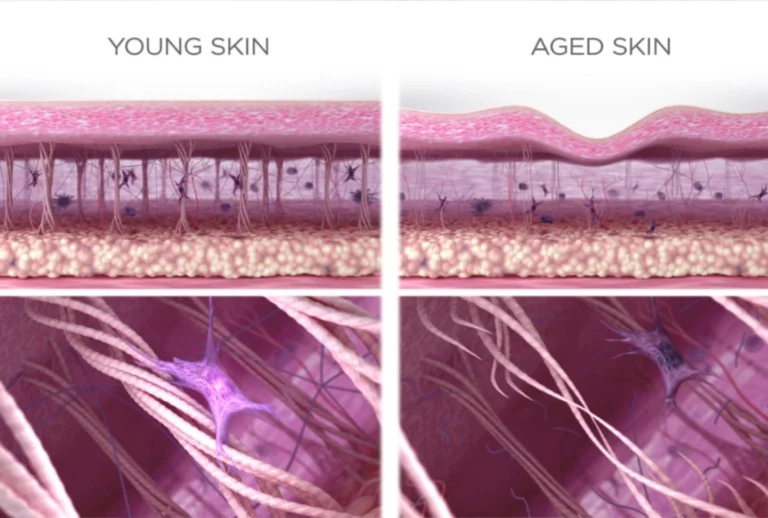
Recognizing early changes can help you understand which aspects of your skincare routine may need attention.
1. Fine Lines Around the Eyes and Mouth
Fine lines may initially appear when smiling or making facial expressions. Over time, some lines can become more noticeable even when the face is at rest.
2. Reduced Skin Elasticity
Skin may gradually become less firm, making the cheeks, jawline, or lower face appear softer than before.
3. Enlarged Pores and Uneven Texture
Changes in sebum production, skin elasticity, and accumulated sun exposure can affect the appearance of pores and overall skin texture.
4. Dullness and Dehydration
Skin that looks less radiant or feels consistently dry may benefit from a review of its hydration and skincare routine.
5. Early Skin Laxity
Mild skin laxity may appear around the cheeks, jawline, or lower face. At this stage, some people begin exploring non-surgical treatments designed to improve the appearance of skin firmness. Not everyone experiences these changes at the same age or in the same way. Your skin condition is more important than your age alone.
Preventive Skin Treatments Available in Korea
Professional treatments can be considered as part of a personalized slow aging plan. The most appropriate option depends on your skin condition, primary concern, medical history, and treatment goals.
Here are several treatment categories worth understanding.
1. Skin Boosters: Supporting Hydration and Skin Quality
Skin boosters are injectable treatments designed to improve selected aspects of skin quality, depending on the product and formulation. Some are used to address concerns such as dryness, fine surface texture, or overall skin appearance. Different products have different ingredients, mechanisms, and indications, so they should not be treated as in rchangeable.For people beginning to notice changes in skin hydration or texture, a clinician may discuss whether a suitable skin booster is appropriate.
2. Collagen-Stimulating Treatments: Addressing Selected Skin Concerns
Some injectable treatments are designed to stimulate the skin’s collagen response. Depending on the product, they may be considered for selected concerns involving skin texture, firmness, or volume. These treatments are not necessarily suitable for everyone and may require multiple sessions. Results develop gradually and vary according to the product and individual response. A professional assessment is important before choosing a collagen-stimulating treatment.
3. Ultherapy Prime: For Selected Skin Laxity
Ultherapy Prime uses micro-focused ultrasound energy with real-time imaging to target selected tissue depths. It may be considered for people concerned about mild to moderate skin laxity in appropriate treatment areas, including selected areas beneath the chin and along the face. Rather than adding volume, the treatment is designed to support lifting and collagen remodeling.
4. Thermage FLX: Supporting Skin Firmness
Thermage FLX uses radiofrequency energy to heat targeted tissue and support collagen remodeling. It may be considered for selected skin-tightening and wrinkle-related concerns in its indicated treatment areas. For people noticing changes in skin firmness, it can be discussed as one possible option within a broader skin rejuvenation plan.
5. Laser Treatments: Addressing Uneven Tone and Texture
Slow aging is not only about wrinkles and sagging. Uneven pigmentation, sun spots, and changes in skin texture can also affect the overall appearance of the skin. Depending on the concern, selected laser treatments may help improve the appearance of pigmentation or other surface-level skin issues. However, different pigmentation conditions require different approaches. For example, melasma needs careful assessment because some laser treatments may not be appropriate for every patient.
Which Preventive Skin Treatment Is Right for You?
There is no single treatment that addresses every sign of aging. The best choice depends on what you want to improve and the condition of your skin.
| Skin Concern | Suitable Treatment | Main Treatment Goal |
|---|---|---|
| Dryness and reduced hydration | Skin Boosters | Support skin hydration, smoothness, and overall skin quality. |
| Uneven texture and early signs of reduced firmness | Collagen-Stimulating Treatments | Support collagen-related skin remodeling and improve selected texture concerns. |
| Early skin laxity | Ultherapy Prime | Target deeper tissue layers to address mild to moderate skin laxity when appropriate. |
| Fine lines and selected firmness concerns | Thermage FLX | Use radiofrequency energy to support skin tightening and improve the appearance of firmness. |
| Uneven pigmentation and sun spots | Laser Treatments | Address selected pigmentation concerns and promote a more even-looking skin tone. |
Treatment suitability depends on your skin condition, medical history, and individual goals. A professional consultation is recommended before choosing a procedure.
This table is a general guide, not a treatment recommendation. Some concerns may require a combination of approaches, while others may respond better to skincare or observation rather than an aesthetic procedure.
When Should You Consider Professional Skin Treatments?
You do not need to wait until visible signs of aging become severe before consulting a professional.
A skin assessment may be helpful if you notice:
- Fine lines becoming more visible.
- Skin feeling less firm than before.
- Persistent dryness or changes in skin texture.
- Uneven skin tone or visible sun spots.
- Early changes around the cheeks or jawline.
How to Build a Long-Term Slow Aging Routine
Professional treatments work best as part of a broader approach to skin health. Consistent daily habits remain essential.
Morning Routine
- Use a gentle cleanser suited to your skin type.
- Apply a moisturizer to support hydration.
- Finish with broad-spectrum SPF 30 or higher.
- Reapply sunscreen when necessary, especially during prolonged outdoor exposure.
Evening Routine
- Remove makeup and sunscreen thoroughly.
- Use suitable skincare ingredients based on your skin’s needs and tolerance.
- Apply moisturizer to support the skin barrier.
- Avoid introducing too many active ingredients at once.
Long-Term Habits
- Maintain a balanced diet and regular physical activity.
- Prioritize sufficient sleep.
- Avoid smoking.
- Limit excessive sun exposure.
- Review your skincare routine as your skin changes.
A consistent routine can help maintain skin health, even when you are not undergoing professional treatments.
Why Choose View Skin Clinic for Your Slow Aging Journey?
Slow aging is not about changing your appearance as quickly as possible. It is about understanding your skin and choosing treatments that match your needs at each stage. At View Skin Clinic, patients can explore different aesthetic treatment options, including skin rejuvenation, lifting, and laser treatments.
Rather than recommending the same procedure to everyone, an individualized consultation helps identify your main concerns and determine which options may be appropriate. Whether you are concerned about early fine lines, reduced firmness, uneven skin tone, or changes in skin texture, the first step is understanding what your skin actually needs.
FAQ
There is no specific age to begin. Some people start paying closer attention to skin health in their 20s, while others focus on professional treatments in their 30s or later. Your skin condition and individual concerns should guide the decision.
Slow aging emphasizes long-term skin health, consistent care, and gradual management of visible changes. Anti-aging often refers more broadly to treatments and products intended to address existing signs of aging. The two approaches can overlap.
No treatment can stop the natural aging process. Certain procedures may improve specific concerns, such as skin laxity, texture, or pigmentation, but results vary and ongoing skin care remains important.
Some younger adults may be suitable candidates if they have specific concerns that match the product’s indications. However, age alone is not a reason to undergo injections. A clinician should assess whether treatment is necessary and appropriate.
They are not all the same. Some skin boosters primarily focus on hydration or skin quality, while certain injectable products are designed to stimulate collagen-related responses. Their ingredients, indications, and treatment protocols differ.
It may be considered for selected patients with appropriate skin laxity and treatment indications. It is not necessary for everyone, and a clinician should determine whether the expected benefits justify treatment.
Some treatments may be combined or scheduled in stages, depending on the procedures and your skin condition. Treatment timing, compatibility, and safety should be assessed by a qualified clinician.
For many people, daily skincare is the foundation of a slow aging routine. Sunscreen, moisturizer, and suitable active ingredients can support skin health. Professional treatments may be considered when specific concerns require additional attention.
There is no universal schedule. Treatment frequency depends on the procedure, product, skin condition, and individual response. Follow the clinician’s recommended intervals rather than undergoing treatments more frequently than necessary.
Korea offers a wide range of dermatology and aesthetic treatment options. However, choosing a clinic should involve checking the qualifications of the medical professionals, treatment indications, safety practices, and the suitability of the proposed procedure.