
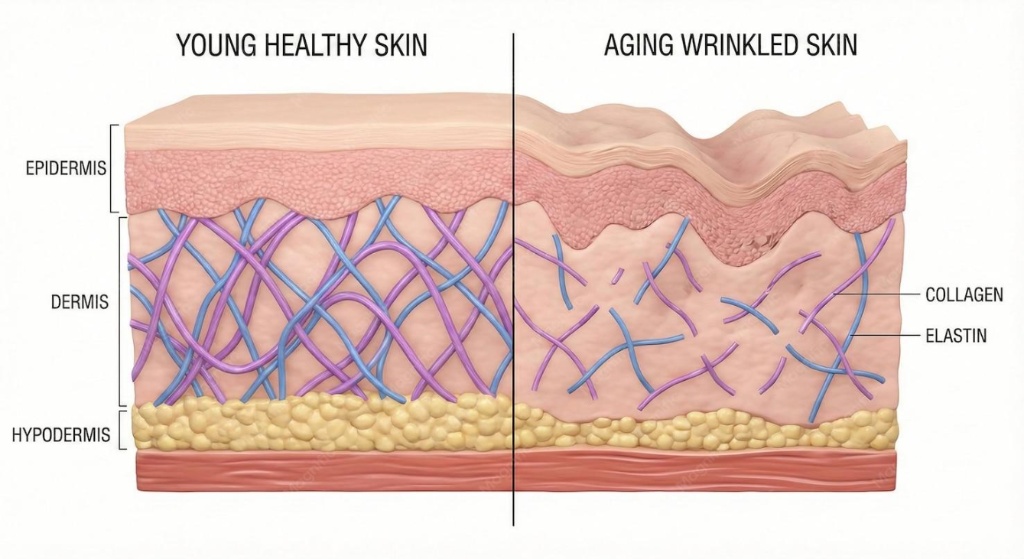
Skin aging is a natural process, but the first visible changes can sometimes appear earlier than expected. You may notice that your cheeks look less firm, your jawline is not as defined as before, or fine lines remain visible even when your face is relaxed. These changes are often associated with a gradual decline in collagen, elastin, and skin elasticity. While skincare can help maintain a healthy complexion, it may not fully address deeper concerns related to skin laxity. This is where non-surgical lifting treatments may be worth considering. Modern aesthetic technologies, including ultrasound and radiofrequency treatments, are designed to target different layers of the skin and support collagen remodeling without surgical incisions.
But how do you know when it is time to consider a lifting treatment? Which option may suit your skin condition, and what results should you realistically expect? In this guide, we explore the early signs of skin aging, available non-surgical lifting options, and how to choose an approach that complements your natural facial features.
What Causes Skin to Lose Its Firmness?
As we age, the skin gradually undergoes structural changes. Collagen and elastin, two important proteins responsible for skin support and elasticity, naturally decrease over time.
Collagen helps maintain skin firmness, while elastin allows the skin to stretch and return to its original shape. Several factors can influence how quickly these changes become visible:
- Natural aging: Collagen production and skin elasticity gradually decline with age.
- Sun exposure: Ultraviolet (UV) radiation contributes to collagen breakdown and premature skin aging.
- Genetics: Family history can influence when and how signs of aging appear.
- Lifestyle habits: Smoking, insufficient sleep, and other lifestyle factors may contribute to visible skin aging.
- Environmental stress: Pollution and oxidative stress can affect overall skin health.
7 Early Signs of Skin Aging You Should Recognize
Skin aging does not happen overnight. In many cases, the first signs are subtle and become more noticeable over time. Here are seven common changes to look out for.
1. Reduced Skin Elasticity
One of the earliest signs of aging is a gradual loss of skin elasticity. You may notice that your skin does not feel as firm as it once did, particularly around the cheeks, lower face, and neck. This change is associated with the gradual breakdown of collagen and elastin fibers.
2. Early Jowls and Less Defined Jawline
Have you noticed that your jawline looks softer or less defined than before? As skin firmness decreases, the lower face may begin to show mild sagging around the jawline. This can create the appearance of early jowls and a less distinct facial contour. Changes in facial fat distribution and underlying structures can also contribute to this appearance.
3. Mild Cheek Sagging
The cheeks play an important role in maintaining youthful facial proportions. Over time, changes in facial volume and tissue support can make the cheeks appear less lifted or slightly flatter. This may affect the overall balance of the face, especially when combined with changes around the lower cheeks and jawline.
4. Fine Lines and Wrinkles
Fine lines may initially appear around the eyes, forehead, and mouth. These lines can become more noticeable as collagen levels decrease and the skin becomes less resilient. Some lines are caused by repeated facial expressions, while others are associated with changes in skin structure and elasticity.
5. Loose Skin Around the Neck
The neck is often one of the areas where skin aging becomes noticeable. Because the skin around the neck is relatively delicate, reduced elasticity can contribute to fine lines, crepey texture, and mild sagging. Changes in the neck may occur alongside lower-face laxity.
6. Less Firm Skin Around the Eyes
The skin around the eyes is naturally thin and delicate. As collagen and elastin decrease, fine lines and mild skin laxity may become more visible. Some people also notice that their upper eyelids appear less firm. However, significant eyelid drooping may require a different medical assessment rather than a non-surgical lifting treatment alone.
7. Makeup Does Not Sit as Smoothly as Before
Sometimes, early skin aging is noticeable through everyday changes rather than obvious wrinkles. Makeup may settle more easily into fine lines, and the skin may appear less smooth or firm than it previously did. Although hydration and skincare can improve the appearance of the skin surface, these changes may also be associated with deeper structural aging.
Remember: These signs do not automatically mean you need an aesthetic procedure. Skin aging varies from person to person, and a professional assessment can help identify the underlying concerns.
When Should You Consider Non-Surgical Lifting?
There is no specific age when everyone should start lifting treatments. Some people notice early skin laxity in their late 20s or 30s, while others maintain relatively firm skin for much longer. Genetics, lifestyle, sun exposure, and individual facial anatomy all play a role. You may consider a professional lifting consultation if:
- Your cheeks or jawline are beginning to look less defined.
- You notice mild sagging around the lower face or neck.
- Your skin feels less firm than it used to.
- You want to address early skin laxity without surgery.
- You prefer gradual, natural-looking improvements rather than dramatic changes.
- You want to understand which treatment options are suitable for your current skin condition.
Types of Non-Surgical Lifting Treatments Available in Korea
Different lifting technologies use different forms of energy to target selected tissue layers. At View Skin Clinic, several non-surgical lifting options are available, including Ultherapy Prime, Thermage FLX, Titanium, Onda Lifting, and Shurink. Each treatment has different mechanisms and potential applications.
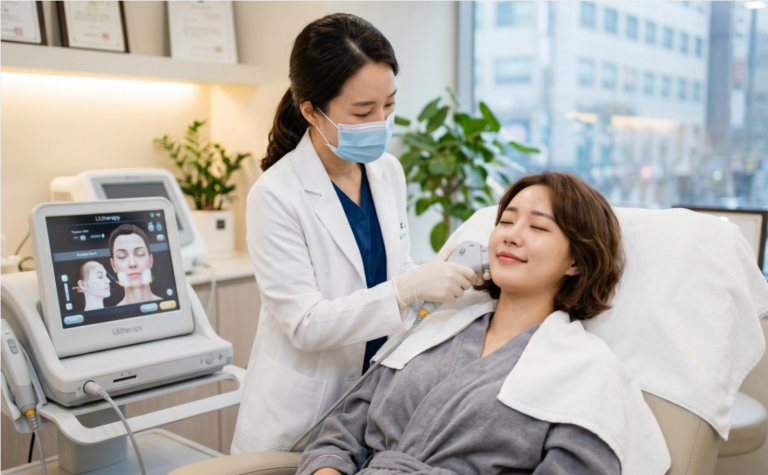
1. Ultherapy Prime: Focused Ultrasound for Deeper Lifting
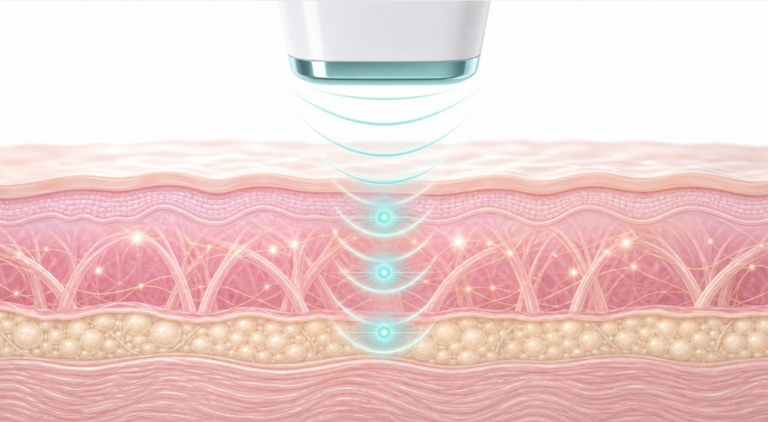
Ultherapy Prime uses micro-focused ultrasound with visualization (MFU-V) technology to deliver energy to targeted tissue layers. It is designed to stimulate collagen remodeling in deeper support structures, including the SMAS layer, depending on the treatment area and settings.
Potential treatment goals include:
- Improving the appearance of mild to moderate skin laxity
- Refining the jawline and lower-face contour
- Addressing selected concerns around the brow and neck
- Supporting gradual skin firmness improvement
2. Thermage FLX: Radiofrequency Skin Tightening
Thermage FLX uses monopolar radiofrequency (RF) energy to heat targeted tissue within the skin. The controlled heating process stimulates collagen remodeling, which may help improve skin firmness and the appearance of wrinkles over time.
Potential treatment goals include:
- Improving skin firmness and elasticity
- Addressing mild skin laxity
- Improving the appearance of fine wrinkles
- Supporting a smoother-looking skin texture
3. Titanium Lifting: Multi-Wavelength Skin Rejuvenation
Titanium is an energy-based aesthetic treatment that uses multiple wavelengths to address selected skin concerns. Depending on the device and treatment protocol, it may be used to support skin tightening, improve the appearance of skin tone, and refine facial contours.
Potential treatment goals include:
- Improving the appearance of skin firmness
- Supporting facial contour refinement
- Addressing selected concerns related to skin tone
- Providing a non-surgical treatment option with minimal interruption to daily activities
4. Onda Lifting: Microwave Technology for Skin and Contour Concerns
Onda Lifting uses Coolwaves® microwave technology to target selected tissue layers. Depending on the treatment area and individual anatomy, it may be used to address localized fat concerns and improve the appearance of skin firmness.
Potential treatment goals include:
- Improving selected facial contour concerns
- Addressing localized fullness
- Supporting skin firmness in suitable treatment areas
5. Shurink: HIFU-Based Skin Tightening
Shurink uses high-intensity focused ultrasound (HIFU) technology to deliver focused energy into selected tissue layers. The treatment is designed to stimulate collagen remodeling and improve the appearance of skin laxity.
Potential treatment goals include:
- Improving mild skin sagging
- Refining selected facial contours
- Supporting skin firmness
- Addressing early signs of lower-face laxity
Ultherapy vs. Thermage vs. Titanium: What Is the Difference?
Although these treatments are all used for non-surgical skin rejuvenation, they work through different energy technologies.
| Treatment | Technology | Main Treatment Focus |
|---|---|---|
| Ultherapy Prime | Micro-focused Ultrasound | Deeper tissue support and skin lifting |
| Thermage FLX | Monopolar Radiofrequency (RF) | Skin tightening and collagen remodeling |
| Titanium | Multi-wavelength Energy Technology | Skin firmness, tone, and contour refinement |
| Onda Lifting | Coolwaves® Microwave Technology | Selected contour and skin firmness concerns |
| Shurink | High-Intensity Focused Ultrasound (HIFU) | Skin tightening and lifting |
There is no universally superior treatment. The right option depends on the depth of skin laxity, treatment area, facial anatomy, and desired outcome. For example, someone with deeper lower-face laxity may have different treatment needs from someone whose main concern is overall skin firmness. A consultation helps determine which technology is most appropriate rather than choosing based on popularity alone.
Non-Surgical Lifting vs. Surgical Facelift: Which Should You Consider?
Both non-surgical lifting and surgical facelifts aim to address visible signs of facial aging, but they work differently.
Non-Surgical Lifting
Non-surgical treatments use technologies such as ultrasound, radiofrequency, and other energy-based approaches to improve selected concerns related to skin laxity. They may be suitable for patients who:
- Have mild to moderate skin laxity
- Prefer to avoid surgical incisions
- Want gradual and subtle improvement
- Are not ready for surgical intervention
Surgical Facelift
A surgical facelift addresses more significant facial sagging by repositioning underlying tissues and removing or tightening excess skin. It may be considered for patients with more advanced skin laxity who want a more substantial structural correction. The procedure involves surgery, anesthesia, and a longer recovery period. Neither approach is right for everyone. A qualified medical professional can help determine which option is appropriate based on your facial anatomy, degree of skin laxity, health history, and expectations.
How to Choose the Right Lifting Treatment for Your Skin
Choosing a lifting treatment should begin with understanding your main concern. Rather than selecting a procedure simply because it is popular, consider these factors:
1. Identify Your Main Concern
Are you experiencing loose skin, early jowls, reduced cheek firmness, or changes in your neck area? Different concerns may require different treatment approaches.
2. Understand the Treatment Technology
Ultrasound, radiofrequency, and microwave-based treatments work differently. Understanding their mechanisms can help you discuss the most suitable options with your practitioner.
3. Consider Your Facial Anatomy
Skin thickness, facial fat distribution, bone structure, and the degree of laxity can influence treatment selection. A treatment that works well for one person may not be appropriate for another.
4. Set Realistic Expectations
Non-surgical lifting treatments are designed to provide selected improvements without surgery. They cannot reproduce all the results of a surgical facelift. Your practitioner should explain the expected degree of improvement, possible limitations, and whether additional treatments may be appropriate.
5. Choose a Qualified Medical Provider
The safety and suitability of a procedure depend on proper patient selection, device settings, and treatment technique. Always choose a qualified medical professional who can evaluate your condition and explain the potential risks and benefits.
Conclusion
Choosing the right lifting treatment is not only about selecting a device. It is also about understanding your skin condition and receiving a treatment plan that reflects your individual needs. At View Skin Clinic, patients can explore different non-surgical lifting technologies, including Ultherapy Prime, Thermage FLX, Titanium, Onda Lifting, and Shurink. The clinic emphasizes personalized consultation to help determine which treatment approach may be suitable for each patient’s skin laxity, facial structure, and aesthetic goals. For international patients visiting Seoul, the clinic also provides multilingual support and consultation guidance to help make the treatment process more convenient. Whether you are noticing early jowls, reduced cheek firmness, or less defined facial contours, a professional assessment can help you understand your available options. Contact us via WhatsApp for an immediate appointment at View Skin Clinic.
FAQ
There is no fixed age to begin non-surgical lifting. Treatment decisions should be based on skin condition, facial anatomy, and the presence of skin laxity rather than age alone.
Early signs may include reduced skin elasticity, mild cheek sagging, less defined jawline contours, and loose skin around the neck. However, these changes do not automatically mean that a lifting procedure is necessary.
Non-surgical lifting may help improve the appearance of mild to moderate skin laxity. The degree of improvement depends on the treatment technology, skin condition, and individual response.
Ultherapy uses focused ultrasound to target deeper tissue layers, while Thermage uses radiofrequency energy to stimulate collagen remodeling and improve skin firmness. Neither is universally better; the appropriate option depends on your specific concerns.
Certain lifting treatments may help improve the appearance of mild jawline sagging and refine facial contours. However, the results depend on whether the concern is related to skin laxity, fat distribution, or underlying facial structure.
Treatment longevity varies depending on the device, treatment settings, skin condition, and individual aging process. Results may gradually change as natural aging continues. Your practitioner can provide a more realistic expectation for the specific treatment.
Many non-surgical lifting treatments involve limited downtime, but temporary redness, swelling, tenderness, or other side effects may occur. Recovery varies depending on the device and treatment intensity.
In selected cases, different lifting technologies may be combined to address different tissue layers or concerns. However, combining treatments is not appropriate for everyone. Your practitioner should determine the treatment sequence and timing.
No. Non-surgical lifting can improve selected signs of mild to moderate skin laxity, but it cannot reproduce the structural changes achieved through a surgical facelift. Patients with significant sagging or excess skin may need a surgical consultation.
A professional consultation is the best starting point. Your practitioner can evaluate skin elasticity, facial structure, the degree of sagging, and your aesthetic goals before recommending an appropriate treatment option.