
RE20 vs. Rejuran Healer: An Exhaustive Clinical Comparison of Modern Bio-Stimulators
The evolution of the skin booster market has shifted from simple hydration to complex regenerative medicine. Today, patients at View Skin Clinic are no longer asking for ‘general rejuvenation’ but are instead analyzing the difference between RE20 and Rejuran at a molecular level. This guide provides a scholarly examination of RE20 and Rejuran Healer, comparing their biological pathways, clinical efficacy, and suitability for various skin phenotypes.
The Biological Paradigm: Polynucleotides vs hADM
To understand the RE20 vs Rejuran debate, one must first understand the underlying science of tissue engineering. While both treatments fall under the ‘skin booster’ umbrella, they utilize fundamentally different mechanisms of action. This is the core difference between RE20 and Rejuran: one provides the ‘signal’ for repair, while the other provides the ‘scaffold’.
Rejuran Healer: The PN (Polynucleotide) Signaling Pathway
Rejuran Healer is formulated with Polynucleotides (PN) extracted from salmon DNA. In a Rejuran Healer comparison with other injectable treatments, its primary strength lies in its ability to trigger DNA repair and reduce inflammation. The PN molecules act as metabolic building blocks and signaling molecules that activate A2A receptors, promoting fibroblast proliferation and collagen synthesis. This makes it a gold standard for healing damaged skin barriers.
RE20: The hADM (Human Acellular Dermal Matrix) Structural Pathway
RE20 represents the next generation of regenerative aesthetics. In the context of polynucleotides vs hADM, RE20 utilizes human acellular dermal matrix. This matrix is composed of approximately 89% Type I Collagen, along with elastin and glycosaminoglycans. Unlike PN, which signals the body to work, hADM physically replaces lost dermal density. For those seeking a skin booster for thin skin, RE20 offers a direct structural intervention that Rejuran cannot match in volume alone.
Deep Dive Analysis: Mechanisms of Action
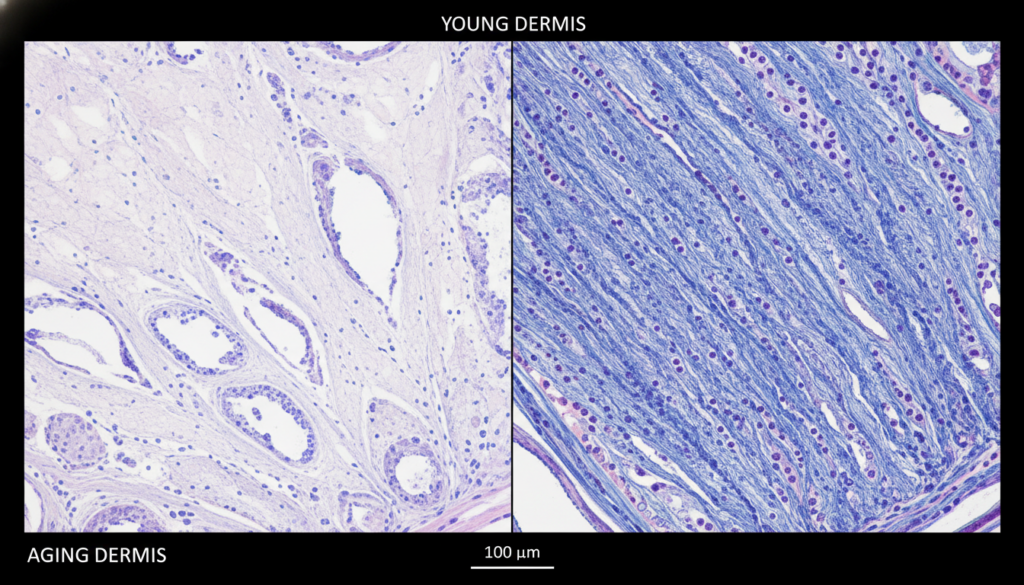
A detailed Rejuran Healer comparison requires a look at the histology of the skin. When we analyze the difference between RE20 and Rejuran, we see a distinction between ‘bio-activation’ and ‘bio-integration’.
| Feature | Rejuran Healer (PN) | RE20 (hADM) |
|---|---|---|
| Primary Component | Salmon DNA Polynucleotides | Human Acellular Dermal Matrix |
| Primary Goal | Healing, Inflammation reduction, Glow | Dermal thickening, Pore reduction, Density |
| Best For | Sensitive, inflammatory, or post-laser skin | Aging, inelastic skin with visible pores |
| Recovery Time | 2-3 days (embossing effect) | 1-2 days (minimal swelling) |
The Physics of Dermal Density
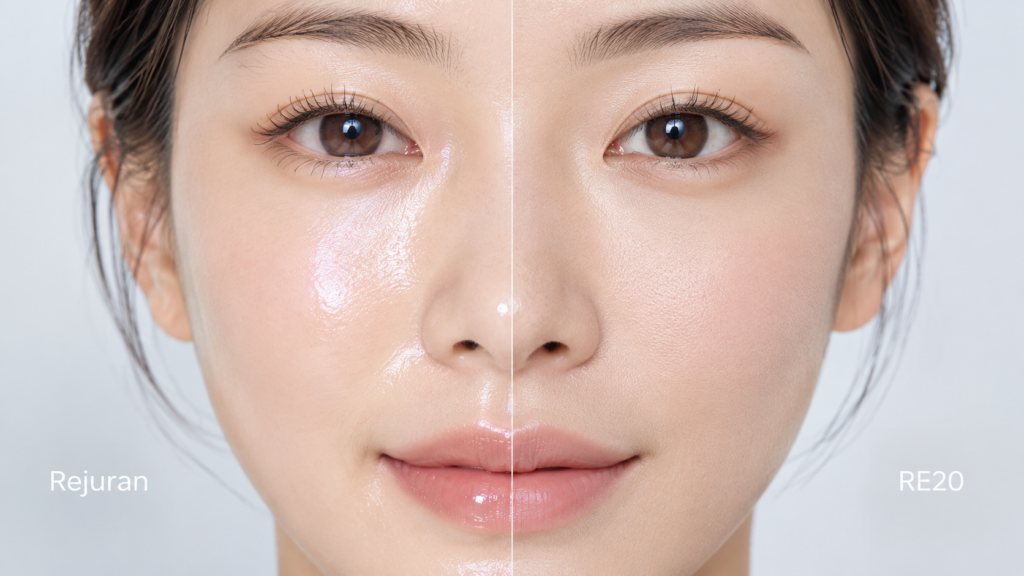
When considering RE20 vs Rejuran, the physical density of the product matters. RE20 is a micronized particulate that integrates into the Extra Cellular Matrix (ECM). This makes RE20 a superior skin booster for thin skin because it physically fills the gaps left by degraded collagen. Conversely, a Rejuran Healer comparison shows that PN is a liquid phase stimulant that resorbs quickly while leaving behind biological signals for the skin to heal itself over 4-6 weeks.
Clinical Application: Choosing the Right Booster
The difference between RE20 and Rejuran is most apparent when examining patient age and skin condition. At View Skin Clinic, we utilize a data-driven approach to determine the appropriate protocol.
Indicators for RE20: Dermal Thinning and Pore Sagging
As we age, our dermis loses its structural integrity. If you are specifically looking for a skin booster for thin skin that has lost its ‘bounce’, RE20 is the clinical preference. In many RE20 vs Rejuran case studies, patients with wide ‘Y-shaped’ pores (caused by gravity and skin laxity) see significant improvement with RE20 due to its scaffolding effect. For more information on our collagen-building treatments, visit our Rejuran and Booster service page.
Indicators for Rejuran: Sensitivity and Barrier Repair
If the patient suffers from rosacea, chronic dryness, or post-acne scarring, a Rejuran Healer comparison often favors Rejuran. The anti-inflammatory properties of PN help stabilize the skin’s microenvironment. While there is a difference between RE20 and Rejuran in terms of volume, Rejuran excels at creating a ‘lit-from-within’ glow that is highly sought after in Korean aesthetic medicine.
Technical Analysis: Polynucleotides vs hADM
To truly understand the polynucleotides vs hADM debate, we must look at the biochemical longevity. PN molecules in Rejuran are gradually broken down into nucleotides, which the skin uses as energy and building blocks. In the RE20 vs Rejuran timeline, Rejuran requires 3 sessions at 4-week intervals to reach peak efficacy. RE20, being an acellular matrix, has a more immediate ‘filling’ effect on the dermis, though it also stimulates long-term neocollagenesis.
Why hADM is Gaining Popularity
The difference between RE20 and Rejuran has led to a rise in RE20’s popularity among patients over 40. The skin booster for thin skin category was previously dominated by fillers or PLLA, but RE20 offers a more natural, ‘bio-identical’ approach without the risk of granulomas. When performing a Rejuran Healer comparison, medical professionals note that while Rejuran improves texture, RE20 improves thickness.
Strategic Implementation and Combination Protocols
Often, the answer to RE20 vs Rejuran is not ‘either/or’ but ‘both’. A sophisticated treatment plan might involve using Rejuran to heal the surface barrier and RE20 to strengthen the deep dermis. Understanding the difference between RE20 and Rejuran allows for a layered approach to facial rejuvenation.
The View Skin Clinic Approach
We recommend a consultation via WhatsApp to discuss your specific skin thickness. If your primary concern is the skin booster for thin skin, we may lead with RE20. If your concern is inflammatory aging, Rejuran is the starting point.
Comparative Efficacy in Pore Management
In the RE20 vs Rejuran assessment for pore reduction, RE20 typically provides a more visible ‘tightening’ of the pore walls. A Rejuran Healer comparison shows that while it improves skin health, it may not provide enough structural support to close large, aged pores as effectively as the hADM in RE20.
Conclusion: The Future of Skin Boosters
The choice between polynucleotides vs hADM represents the current frontier of aesthetic science. Whether you seek the healing power of Rejuran or the structural restoration of RE20, both treatments represent the pinnacle of Korean skincare technology. Understanding the difference between RE20 and Rejuran ensures that you invest in the treatment that matches your skin’s biological needs.
Ready to transform your skin? Contact View Skin Clinic today for a bespoke analysis of your dermal density and health.
FAQ
What is the main difference between RE20 and Rejuran?
The main difference between RE20 and Rejuran is their composition: RE20 uses human acellular dermal matrix (hADM) for structural support, while Rejuran uses polynucleotides (PN) from salmon DNA for cellular healing and repair.
Which is better for aging skin: RE20 vs Rejuran?
In the RE20 vs Rejuran debate for aging, RE20 is generally superior for skin that has become thin and lost density. Rejuran is better for overall skin health and repair.
Can I use RE20 as a skin booster for thin skin?
Yes, RE20 is an excellent skin booster for thin skin because it provides the actual dermal scaffold (collagen and elastin) that thin skin lacks.
In a Rejuran Healer comparison, does RE20 hurt more?
Both treatments involve multiple micro-injections. However, the difference between RE20 and Rejuran in terms of pain is minimal, and we use topical numbing to ensure comfort.
How many sessions of RE20 are needed?
Similar to a Rejuran Healer comparison, RE20 usually requires 3 sessions for optimal long-term results, although structural improvements can often be seen after the first session.
Is polynucleotides vs hADM safe?
Both polynucleotides vs hADM are considered highly biocompatible. Rejuran uses purified salmon DNA, and RE20 uses acellular human matrix which removes cellular components to prevent immune rejection.
Which skin booster gives a better glow?
A Rejuran Healer comparison typically shows that Rejuran provides a more immediate ‘glow’ and hydration effect due to its focus on cellular metabolic activity.
Does RE20 help with large pores?
Yes, when comparing RE20 vs Rejuran for pores, RE20 is often preferred because it thickens the dermis surrounding the pore, effectively ‘squeezing’ the pore smaller.
How long do the results last?
The difference between RE20 and Rejuran longevity is subtle; both usually last 6-12 months after a full course of treatment, depending on lifestyle and skin maintenance.
Can I combine RE20 and Rejuran?
Absolutely. Combining polynucleotides vs hADM is a common high-end protocol at View Skin Clinic to address both structural thinning and surface-level sensitivity.