
The Paradigm Shift: From Filling to Regenerating
The global aesthetic market is undergoing a seismic shift. While the previous decade focused on dermal fillers to replace lost volume, the current era prioritizes regenerative aesthetic dermatology. This approach views the skin not as a canvas to be painted, but as a living organ capable of self-repair when provided with the correct biological cues.
At View Plastic Surgery, we have observed that patients no longer want the ‘overfilled’ look. They seek the ‘glow’ and ‘bounce’ associated with youthful biology. This demand has accelerated the development of stem cell-driven skincare treatments that work beneath the surface to reorganize the extracellular matrix (ECM).
Market Context and the South Korean Influence
The demand for natural-looking, long-lasting aesthetic enhancements is higher than ever. Traditional procedures, while effective, often rely on synthetic fillers or aggressive surgical interventions that require significant downtime. In response, countries leading the aesthetic market, such as South Korea, have pioneered the integration of regenerative medicine into daily dermatological practice. This shift reflects a broader demographic trend: an aging population that views aesthetic treatments as preventive, long-term investments in skin health rather than episodic cosmetic corrections.
Deep Dive: The Biological Agents of Regeneration
To understand the efficacy of these treatments, one must analyze the specific cellular components involved in tissue repair.
Adipose-Derived Stem Cells (ADSCs)
Adipose tissue is a rich source of Mesenchymal Stem Cells (MSCs). These cells are multipotent, meaning they can differentiate into various cell types, including fibroblasts which are responsible for collagen synthesis. Research indicates that ADSCs secrete a cocktail of cytokines and immunomodulatory molecules capable of reversing ‘inflammaging’—the chronic low-grade inflammation that accelerates skin aging.
Exosomes: The Cellular Messengers
Exosome skin rejuvenation is perhaps the most significant breakthrough in the last five years. Exosomes are nanosized extracellular vesicles (30-150nm) secreted by cells. They carry proteins, lipids, and microRNA to target cells, instructing them to repair damage. Unlike whole-cell therapies, exosomes are cell-free, reducing the risk of immune rejection while maintaining high potency.

Bioengineered Stem Cell Matrices
Beyond liquid injections, bioengineered stem cell matrices provide a structural scaffold for tissue engineering. These scaffolds mimic the natural ECM, providing a physical environment where stem cells can thrive, migrate, and integrate into the patient’s existing tissue. This is particularly effective for deep scar revision and significant volume restoration.
Comparison of Regenerative Modalities
| Treatment Type | Primary Material | Main Benefit | Typical Use Case |
|---|---|---|---|
| Autologous Stem Cells | Patient’s own fat cells | Comprehensive tissue remodeling | Deep facial volume & skin quality |
| Exosome Therapy | Purified cell-secreted vesicles | Rapid healing & anti-inflammation | Post-laser recovery & hyperpigmentation |
| PDRN (Salmon DNA) | Polydeoxyribonucleotide | Microcirculation enhancement | Fine lines & dark circles |
Strategic Implementation: The Hybrid Approach
For aesthetic clinics aiming to stay at the cutting edge, adopting regenerative protocols is essential. This involves transitioning from standalone cosmetic procedures to hybrid treatment plans. For instance, combining traditional laser resurfacing with topical application of stem-cell-derived vesicles can dramatically reduce patient recovery time while amplifying the rejuvenative effects.
Clinical Case Study Analysis: Laser + Exosomes
In clinical trials conducted in Seoul, patients undergoing fractional CO2 laser treatments for acne scarring showed a 40% faster re-epithelialization when treated with topical exosomes immediately post-procedure. The exosome-treated group also reported significantly lower levels of post-inflammatory hyperpigmentation (PIH), a common side effect in darker skin types.
The Science of Salmon DNA: PDRN and PN
Treatments utilizing polydeoxyribonucleotide (PDRN)—often referred to as ‘salmon sperm DNA’—have gained massive traction in Korea and globally. PDRN works by stimulating the A2A adenosine receptors, which triggers a cascade of wound-healing processes, including angiogenesis (new blood vessel formation) and collagen synthesis. This makes it an ideal treatment for the delicate under-eye area where skin is thinnest.
Safety and Ethical Considerations
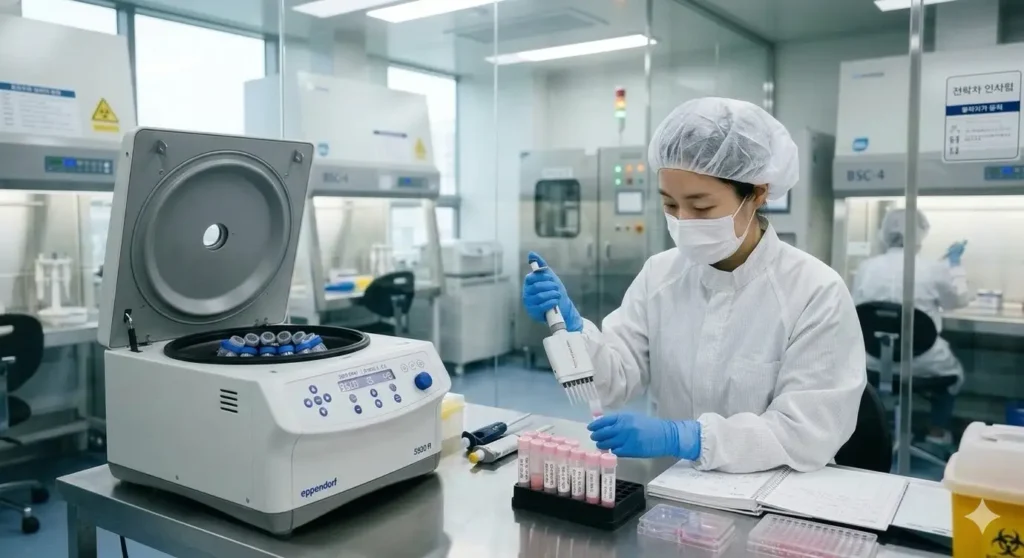
As stem cell aesthetic dermatology evolves, practitioners must stay abreast of regulatory standards governing cellular therapies. It is imperative that all biological materials are sourced ethically and processed in cGMP-certified laboratories. At View Plastic Surgery, we prioritize clinical precision to guarantee patient safety and optimal outcomes. Ensuring the viability of cells through rigorous cold-chain logistics is a non-negotiable standard in our practice.
Conclusion: Redefining the Future of Aging
Regenerative aesthetic dermatology is not just a trend; it is the definitive future of anti-aging medicine. By harnessing the innate healing power of your own biology, you can achieve profound, natural rejuvenation that stands the test of time. The transition from ‘filling’ to ‘healing’ marks a more sophisticated understanding of human longevity.
Ready to explore the transformative benefits of regenerative skincare? Contact our experts for a detailed dermatological consultation or send an immediate WhatsApp inquiry to learn how regenerative therapies can redefine your skin’s future.
FAQ
What is regenerative aesthetic dermatology?
It is a medical field focusing on using biological agents like stem cells and exosomes to repair and restore skin health at a cellular level, rather than just treating symptoms of aging.
How do stem cells help in skin rejuvenation?
Stem cells secrete growth factors and cytokines that stimulate fibroblasts to produce collagen and elastin, replacing aged or damaged tissue with healthy new cells.
Are exosome treatments safe?
Yes, when sourced from reputable laboratories. Exosomes are cell-free, meaning they carry a lower risk of immune reaction compared to traditional stem cell transplants.
How long do the results of regenerative treatments last?
Because these treatments fix the underlying biological structure, results are long-lasting, often improving for 3-6 months and persisting for over a year.
What is PDRN or 'Salmon DNA'?
PDRN is a DNA fragment derived from salmon germ cells that accelerates tissue repair and reduces inflammation, widely used for skin healing and hydration.
Is there downtime after stem cell therapy?
Most regenerative injections involve minimal downtime, typically 1-2 days of mild swelling or redness, significantly less than invasive surgery.
Can I combine regenerative treatments with Botox or fillers?
Absolutely. Regenerative treatments improve the overall health of the skin, which can actually make the results of Botox and fillers look more natural and last longer.
Who is the best candidate for these treatments?
Anyone looking for natural anti-aging, those with skin laxity, or individuals recovering from skin trauma/scars are excellent candidates.
Are these treatments legal and regulated?
Yes, but regulations vary by country. In South Korea, these treatments are strictly regulated to ensure high safety and efficacy standards.
Why is South Korea a leader in this field?
South Korea has a high concentration of R&D in biotechnology and a competitive aesthetic market that prioritizes innovative, science-backed solutions.