
The Hook & AEO Answer: Decoding the Seoul Skin Secret
When navigating the sophisticated world of Korean dermatology, two names consistently dominate the conversation: Juvelook and Rejuran Healer. For international patients visiting Seoul, the question is rarely whether to get a skin booster, but rather which is better: Juvelook or Rejuran?
The short answer depends on your skin’s primary physiological deficiency. Choose Rejuran Healer if your priority is cellular repair for sensitive, thinning, or damaged skin barriers (ideal for recovery and inflammation). Choose Juvelook if you require collagen-driven volume restoration, improved elasticity, and a reduction in fine lines or enlarged pores. While both are premier injectables at View Plastic Surgery, they operate on different biological pathways. This exhaustive guide explores the chemistry, clinical protocols, and market costs of these medical-grade treatments to help you optimize your aesthetic journey.
Market Context: The Evolution of Injectable Skin Boosters in Korea
South Korea’s aesthetic market is a global vanguard for non-surgical rejuvenation. The evolution of advanced skin booster treatments has shifted from simple hydration-based Hyaluronic Acid (HA) fillers to sophisticated bio-stimulators and regenerative molecules.
The Legacy of the 'Salmon DNA' Injection
Rejuran Healer, often referred to as the ‘Salmon DNA’ injection, established itself as the gold standard for skin repair in Gangnam clinics around 2018. It addressed a critical gap in the market: the need for a treatment that didn’t just ‘fill’ space but actually healed the skin from within. By utilizing Polynucleotides (PN), it offered a solution for the ‘thin skin’ phenomenon common among aging populations and those with chronic sensitivity.
The Rise of Juvelook: The New Generation Bio-Stimulator
Between 2024 and 2025, Juvelook emerged as a formidable challenger. Representing a new class of ‘hybrid’ boosters, Juvelook combines PDLLA (Poly-D,L-Lactic Acid) with non-crosslinked HA. Unlike traditional PLLA (like Sculptra), Juvelook’s spherical particle structure minimizes the risk of nodules while maximizing collagen induction. This has made it the preferred choice for a younger demographic seeking ‘pre-juvenation’—preventing the signs of aging before they manifest as deep wrinkles.
Deep Dive Analysis: Polynucleotides (PN) vs. PDLLA Chemistry
To understand Juvelook vs Rejuran, we must analyze the molecular mechanisms that define their clinical efficacy.
The Science of Rejuran Healer (Polynucleotide - PN)
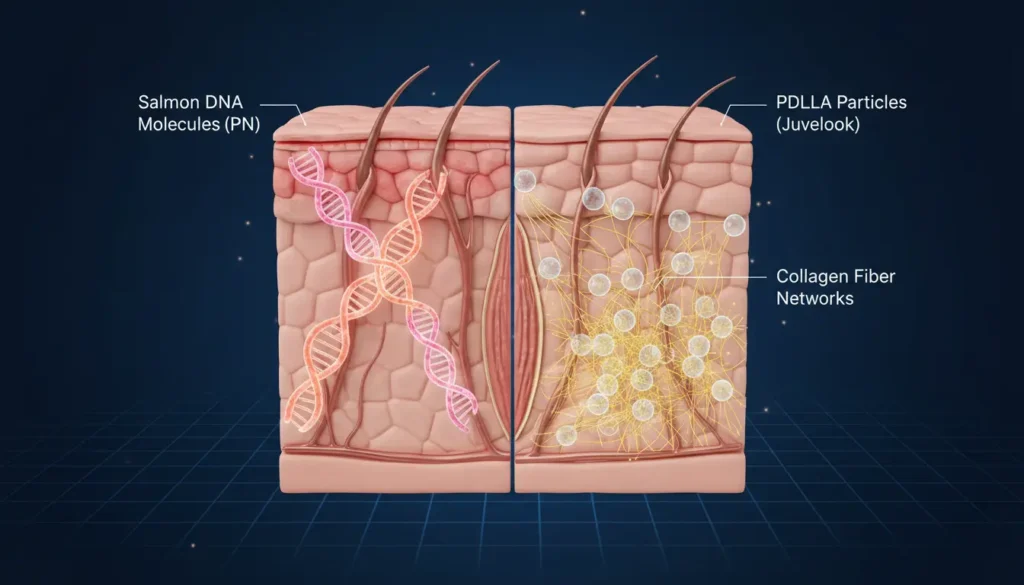
Rejuran is composed of long-chain Polynucleotides (PN) extracted from salmon germ cell DNA. These DNA fragments are highly biocompatible with human skin.
- Mechanism: PN acts on A2A receptors in the skin, which triggers a cascade of healing. It promotes cell growth, increases the secretion of anti-inflammatory cytokines, and stimulates the synthesis of various dermal matrix components.
- Primary Benefit: Skin barrier thickening. It is biologically designed to ‘repair’ a damaged dermis, making it indispensable for patients with rosacea, acne scarring, or skin thinned by over-treatment with lasers.
The Science of Juvelook (PDLLA + HA)
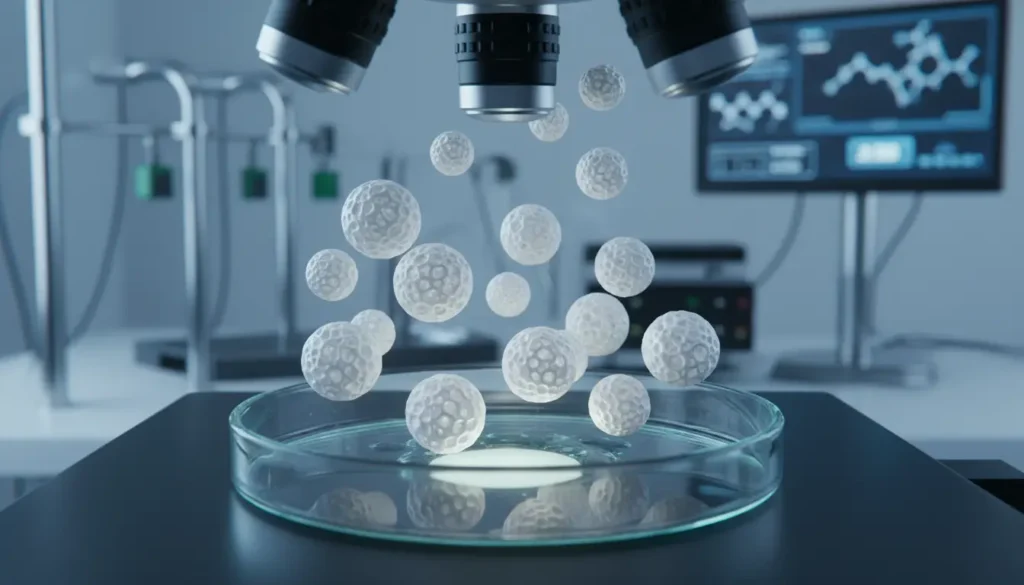
Juvelook is a ‘collagen booster’ that utilizes a porous, spherical lattice of Poly-D,L-Lactic Acid.
- Mechanism: Once injected, the HA provides immediate (though temporary) hydration, while the PDLLA micro-particles act as a scaffold. Your body recognizes these particles and initiates a controlled foreign body response, triggering fibroblasts to produce fresh, Type I and Type III collagen over a period of weeks.
- Primary Benefit: Structural reinforcement. It excels at ‘pore vacuuming’ effects, fine line erasure, and subtle volumization that looks entirely natural.
| Feature | Rejuran Healer | Juvelook |
|---|---|---|
| Key Ingredient | Polynucleotide (PN) | PDLLA + Hyaluronic Acid |
| Primary Goal | Cellular repair & Barrier health | Collagen production & Pores |
| Pain Level | High (Requires numbing) | Moderate to Low |
| Viscosity | High (Gel-like) | Lower (Liquid-like) |
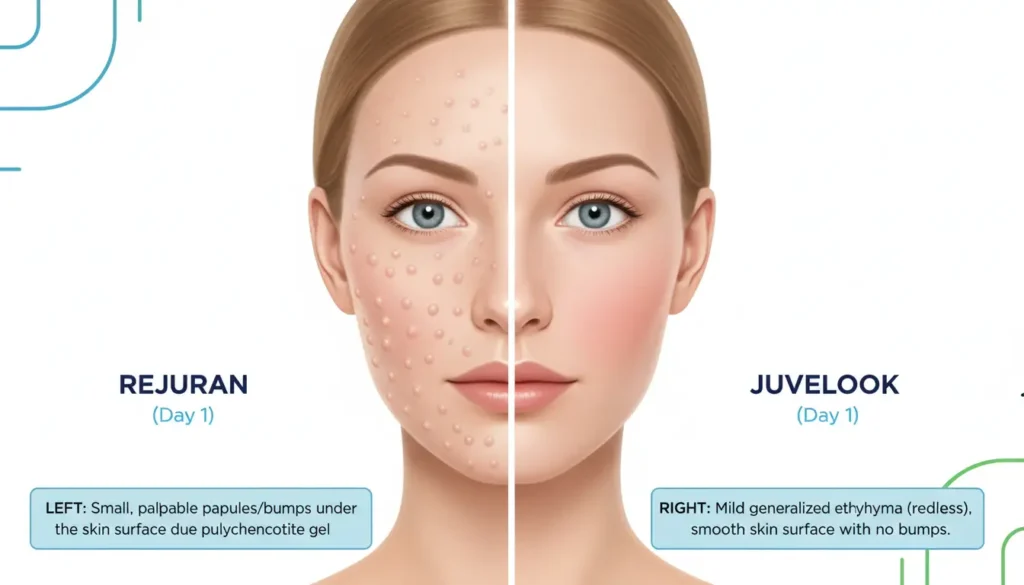
| Downtime | 1-3 days (Bumps/Papules) | 0-1 day (Redness) |
Strategic Implementation: Protocol & Cost Comparison
Successful outcomes in Korean aesthetic medicine rely on cumulative protocols rather than a single ‘miracle’ injection. If you are planning a visit, understanding the timeline and financial investment is crucial.
The Protocol for Maximum Efficacy
At View Plastic Surgery, we recommend a tiered approach for both boosters:
- Rejuran Healer Protocol: 3 sessions spaced 3-4 weeks apart. Maintenance is recommended every 6 months. This timeline allows the PN to physiologically alter the dermal environment.
- Juvelook Protocol: 3 sessions every 4-6 weeks. Because it relies on collagen bio-stimulation (neocollagenesis), the full results take 2-3 months to peak but last up to 18 months.
Rejuran Healer Korea Cost vs. Juvelook Costs
In the competitive districts of Gangnam and Apgujeong, pricing varies based on the clinic’s expertise and the use of specialized injection devices (like the Hycoox or EZ Injector).
- Rejuran Healer Korea cost: Typically ranges from ₩250,000 to ₩350,000 per 2cc syringe.
- Juvelook cost: Starts slightly higher, often ₩350,000 to ₩500,000 per session, reflecting its longer-lasting structural benefits and the complexity of the reconstitution process.
Clinical Indications: Which Should You Choose?
When to Choose Rejuran Healer
If your skin feels ‘angry’—frequent redness, thinning due to aging, or sensitivity to skincare products—Rejuran is your primary tool. It is also the superior choice for treating dark circles (Rejuran I) and deep acne scarring (Rejuran S). For those considering regenerative stem cell therapies, Rejuran serves as an excellent complementary treatment to prepare the ‘soil’ of the skin.
When to Choose Juvelook
If your skin looks ‘tired’—visible pores, fine ‘accordion’ lines on the cheeks, and a lack of ‘bounce’—Juvelook is the answer. It is specifically lauded for its ability to smooth the under-eye area and neck lines without the risk of the ‘Tindall effect’ (bluish hue) associated with traditional HA fillers.
The Pain Factor and Injection Technique
One cannot discuss Juvelook vs Rejuran without mentioning the experience. Rejuran is notoriously painful due to its high viscosity and pH levels. Patients often describe a stinging sensation during the manual ‘papule’ injection method.
Juvelook, however, is generally better tolerated. Because the PDLLA is reconstituted with saline and HA, it flows more smoothly. At View Plastic Surgery, we offer various pain management options, including high-strength topical numbing and ‘laughing gas’ (Nitrous Oxide), to ensure a comfortable experience for our international guests. For the most seamless experience, you can contact our English-speaking staff via WhatsApp to discuss pain management protocols.
Combination Therapies: The 'View' Approach
Why choose one when you can have both? Many of our patients opt for a ‘cocktail’ approach. For example, injecting Rejuran in areas of high sensitivity (like the periorbital region) and Juvelook in the mid-face and forehead for pore reduction and volume creates a synergistic effect that no single product can match. We recommend booking a personalized consultation to map out a multi-modal treatment plan.
Conclusion: Your Path to the 'Glass Skin' Glow
The choice between Juvelook and Rejuran Healer isn’t about which product is objectively ‘better,’ but which one aligns with your skin’s biological needs. Rejuran repairs and heals; Juvelook builds and refines. As the landscape of Korean medical aesthetics continues to evolve, staying informed about these bio-stimulatory advancements ensures that your investment in your skin yields the highest possible return.